
A common DeFi misconception is that the cheapest transaction is automatically the safest one. It is not. A low gas fee can reflect a good execution choice, but it can also accompany a dangerous approval, an unfamiliar contract, or a rushed signature. Likewise, disconnecting a wallet from a website does not necessarily revoke the permissions that were granted earlier. The more useful question is not simply, “How do I save gas?” It is, “What authority am I granting, to which contract, for how long, and at what operational cost?”
That distinction matters for US users managing assets across decentralized exchanges, lending markets, bridges, liquid staking protocols, and newer applications that may not have a long operating history. A browser wallet is not just a key holder. It is also a transaction interpreter, a permission boundary, and part of the user’s verification workflow. Gas optimization should therefore be treated as one layer of risk management—not as a substitute for careful approval and wallet-security practices.
The first myth: a token approval is a one-time payment
When a DeFi application asks for token approval, it is requesting permission for a smart contract to move a specified token from your wallet under defined contract rules. The approval transaction itself consumes gas, but the permission can remain active after the transaction is confirmed. This is the part many users miss: the approval is not merely a receipt for a completed swap. It is an allowance that may be used later, depending on the token and contract logic.
For example, approving a decentralized exchange’s router to spend a stablecoin can make a later swap possible without asking for a fresh approval every time. That convenience can reduce repeated gas costs. But if the contract is compromised, malicious, incorrectly identified, or no longer needed, an unrestricted allowance may expand the potential loss. The danger is not that every approval is malicious. The danger is that users often treat a durable permission as if it were a temporary checkout authorization.
This creates a useful mental model: gas is the price of changing blockchain state, while an approval is a change in who may act on your behalf. Those are related but different risks. A transaction can be inexpensive and still grant broad authority. Conversely, a transaction can be costly yet be the safer choice if it establishes a limited allowance for a known purpose.
Approval management: convenience versus containment
There are two broad approval strategies. The first is a large or effectively unlimited allowance, which reduces the need to approve the same token repeatedly. The second is a limited allowance sized to the intended action. The first approach is convenient and may save a future transaction. The second narrows exposure if the approved contract later becomes unsafe. Neither is universally correct; the choice depends on the protocol, the wallet’s role, the value at risk, and how frequently the user interacts with the application.
A practical rule is to ask whether the approval is proportional to the action. If you intend to swap a modest amount of a token, an allowance far larger than that amount creates a mismatch between purpose and authority. A limited approval may require another transaction later, and that transaction will cost additional gas. That is a real trade-off, not a flaw to be hidden. Security controls often introduce friction because they reduce the amount of trust placed in a single contract.
Revoking an approval is also a state-changing blockchain transaction, so it generally requires gas. Revocation is not free merely because it removes permission. It can be sensible after using a one-time application, when a protocol has suffered a security incident, or when an allowance is no longer needed. But users should avoid treating periodic revocation as a ritual that replaces judgment. Revoking every approval immediately may add cost and inconvenience without improving safety if the same risky behavior is repeated afterward.
The sharper question is whether permission is still justified. A useful review considers four factors: the identity of the contract, the amount approved, the sensitivity of the asset, and the likelihood of future use. A high-value stablecoin allowance to a frequently used, carefully verified protocol deserves a different response from a broad approval granted to an unfamiliar application during a rushed mint.
Gas optimization without unsafe shortcuts
Gas fees fluctuate because block space is limited and users compete to have transactions included. On Ethereum and other networks, the final cost can depend on network demand, transaction complexity, fee settings, and whether a transaction succeeds or reverts. A failed transaction may still consume gas because the network performed computation even though the desired state change did not occur. This is why “try it and see” is a poor optimization strategy when the transaction involves an unfamiliar contract.
Better optimization begins before signing. Confirm that the selected network is the one intended, check the recipient or contract context, inspect the token and amount, and understand whether the action is an approval, a swap, a permit, a deposit, or a withdrawal. Simulating or previewing a transaction can help reveal expected balance changes and warnings, although simulation is not a guarantee. It is a model of the transaction under particular conditions, not proof that the contract is honest or that market conditions will remain unchanged.
Timing can matter as well. If an action is not urgent, users may compare network conditions and avoid periods of intense demand. Layer-2 networks can offer lower fees for supported applications, but lower cost does not erase bridge risk, contract risk, liquidity constraints, or the possibility that an asset behaves differently across networks. A cheap transaction on the wrong chain is not an optimization; it is an operational error that may be difficult or expensive to correct.
Batching can sometimes reduce repeated overhead, but it can also make a transaction harder to understand. A single complex transaction may bundle approvals, swaps, deposits, and callbacks. That can be efficient, yet it increases the importance of reviewing the complete expected outcome rather than focusing on one visible line item. Simplicity is itself a security feature. If a user cannot explain what a transaction is intended to do, saving a small amount of gas is usually not a sound reason to sign it.
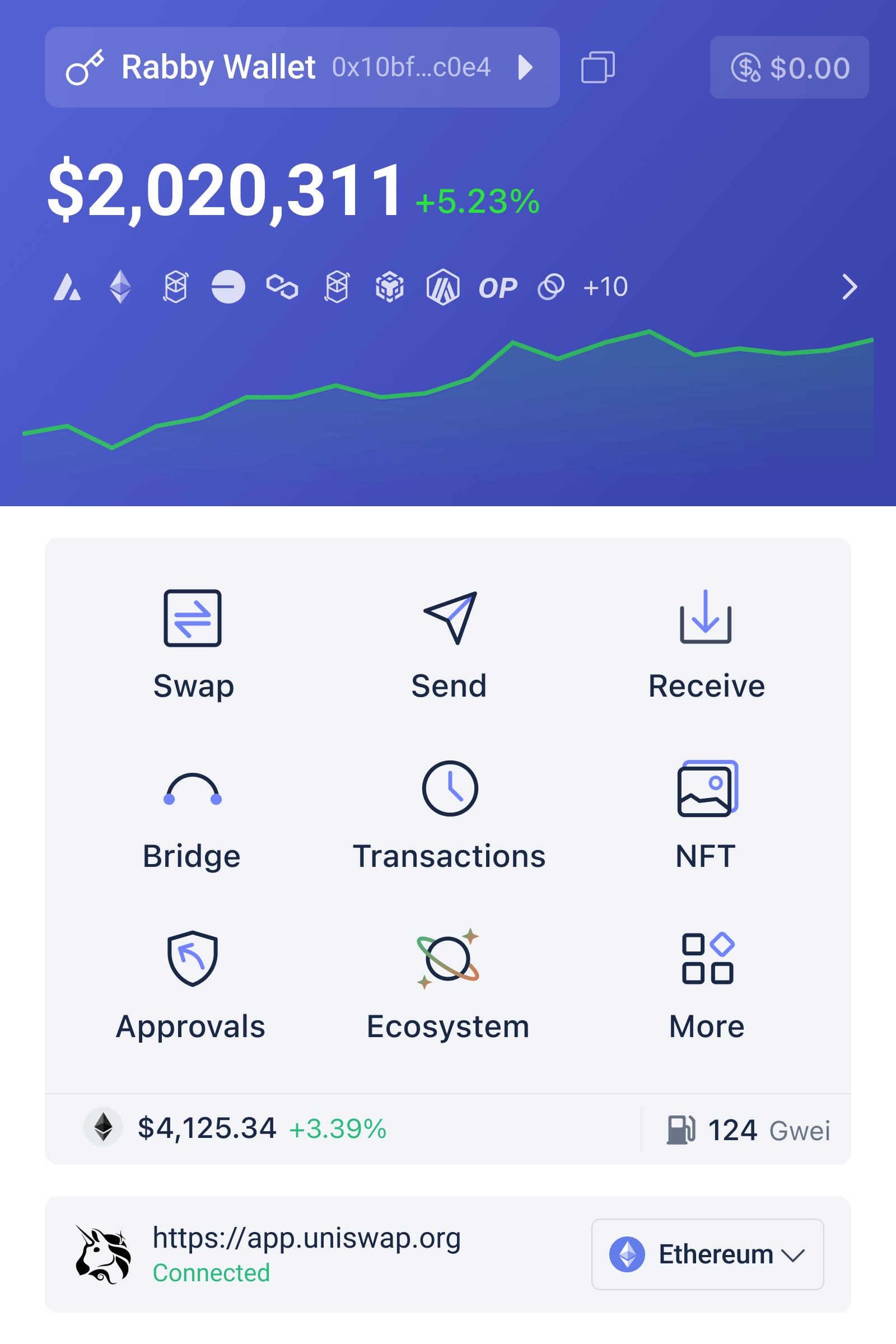
For users preparing to rabby wallet extension installation, the most important step is to obtain the software from an authentic source and verify the browser extension before importing or creating a wallet. A wallet interface can improve transaction visibility, but it cannot protect a recovery phrase that has been exposed, reverse a confirmed transfer, or make a malicious contract trustworthy. Installation hygiene and key security come before interface features.
The security boundary is wider than the wallet window
Wallet security is often described as keeping a seed phrase private. That is essential, but it is only the foundation. The broader attack surface includes browser extensions, phishing pages, fake support accounts, clipboard malware, malicious signatures, compromised devices, and social-engineering attempts that persuade a user to “verify” or “unlock” funds. A wallet can be technically sound while the surrounding computer or website is deceptive.
Never enter a recovery phrase into a website, chat window, form, or browser pop-up. Treat unsolicited requests for private keys, remote desktop access, or “manual synchronization” as hostile. A hardware wallet can reduce exposure of private keys during signing, but it does not automatically make every transaction safe. The user still has to approve the correct action, on the correct network, with the correct contract.
Separate wallets can also reduce concentration risk. A long-term holding wallet should not necessarily be the same wallet used for experimental protocols, token claims, or frequent trading. This does not eliminate risk: funds can still be sent to the wrong address, and a compromised device can affect multiple accounts. But segmentation can limit the damage from one bad approval or one mistaken signature.
Address verification deserves special attention. Copying an address from transaction history can be dangerous if malware alters clipboard contents, while visual similarity between addresses can mislead users. For meaningful transfers, compare the full address through a trusted channel and consider sending a small test amount when the situation justifies the added fee. A familiar-looking name or token symbol is not sufficient evidence of authenticity.
A reusable decision framework for every DeFi transaction
Before signing, pause at three levels. First, verify the context: website domain, wallet account, network, and intended application. Second, verify authority: what contract is being approved, what token can it move, and is the allowance limited or broad? Third, verify outcome: what assets should leave the wallet, what should return, and what permissions will remain afterward?
This framework exposes a subtle but important distinction between transaction risk and permission risk. A swap may have a clear immediate outcome but create a lasting allowance. An approval may move no tokens today but create the ability for a contract to move them later. If the wallet interface highlights only the immediate transfer, users can underestimate the second category. Good review therefore asks not only, “What happens now?” but also, “What becomes possible afterward?”
Gas optimization fits into the framework as a constraint. Compare fees, use appropriate networks, avoid unnecessary repeated approvals, and choose sensible timing when the transaction is not urgent. But do not optimize away the checks that establish intent. A few dollars saved on gas is economically irrelevant if a broad approval exposes a much larger balance. The expected value of caution is often asymmetric: one extra review may cost seconds, while one mistaken signature can create a loss that cannot be reversed.
What to watch as wallets and protocols evolve
Wallets are likely to keep improving transaction simulation, contract warnings, approval visibility, and network selection. Those tools could make safer behavior easier, especially for users who cannot read smart-contract code. Yet warnings will remain imperfect. They depend on available data, interpretation of contract behavior, and assumptions about what the user intended. A clean interface should be treated as helpful evidence, not as a guarantee.
Future approval systems may offer more granular permissions, expiration periods, or account-level controls. If those tools become widely supported, the trade-off could shift toward temporary authority with less repeated friction. The open question is interoperability: a permission model is most useful when wallets, tokens, protocols, and signing standards interpret it consistently. Until then, users should assume that different applications may present materially different approval and signature risks.
Frequently asked questions
Does disconnecting a DeFi website revoke token approvals?
No. Disconnecting usually ends the website’s current connection to the wallet interface. It does not necessarily change the on-chain allowance previously granted to a contract. If you no longer trust or use that contract, review the allowance and revoke it through a suitable transaction if appropriate.
Should every token approval be limited to the exact amount?
Not always. A precise allowance can reduce exposure, but it may require additional approval transactions and gas later. For high-value assets, one-time interactions, or unfamiliar protocols, tighter limits are often a prudent trade-off. For a well-understood application used frequently, some users may accept broader permission for convenience, provided they understand the residual risk.
Can a hardware wallet or browser wallet prevent a malicious transaction?
Neither can guarantee that outcome. Hardware devices help protect private keys, and browser wallets can improve transaction review, but the user still controls the final signature. Security depends on the device, the website, the contract, the network, and the user’s interpretation of the requested action.
The safest DeFi habit is not refusing every approval or chasing the lowest possible fee. It is matching authority to purpose, cost to urgency, and wallet exposure to the value at risk. Once gas, approvals, and security are seen as separate but connected decisions, optimization becomes more than fee hunting: it becomes disciplined control over what your wallet is allowed to do.